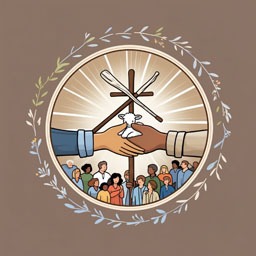

Leading with Love: Walking in Christ’s Servant Heart.

Leadership that Follows the Way of Christ.
Jesus changed the definition of greatness—not by commanding crowds, but by kneeling to serve. True leadership in God’s Kingdom means humbling ourselves and lifting others up, putting their needs before our own. When we serve with love and humility, we reflect the very heart of Yeshua, who “did not come to be served, but to serve, and to give his life as a ransom for many.”
This kind of servant leadership isn’t about recognition or power; it’s about quietly, faithfully meeting needs, washing feet, and walking alongside others in their journeys. When we choose humility—listening, encouraging, and sharing life together—we become channels of God’s grace and healing in our communities.
As you learn to lead through service, let the Holy Spirit shape your heart. Lean into those small, unseen acts of kindness. Remember, every gentle word, every prayer, every act of service builds the Kingdom in ways that echo into eternity.
Journal Prompt: Where can you serve someone quietly this week, expecting nothing in return? Write down your reflections, and ask Ruach HaKodesh to fill you with Christ’s servant heart.
May your leadership be marked by the humility, love, and courage of Yeshua, as you follow His example in both word and deed.
Please log in to add a journal or testimony.
The Basin and the Towel.
On the night of betrayal, Yeshua HaMashiach (ישוע המשיח) [Jesus the Messiah] took a basin and a towel, knelt, and washed dusty feet (John 13:12–17). This humble act redefines leadership for every pastor, parent, and team lead in the Kingdom. We do not begin with a platform but with a posture. We are invited to see authority as the freedom to serve, not the right to be served (Mark 10:42–45). Under the gentle care of Yahweh Rohi (יְהוָה רֹעִי) [The LORD My Shepherd], we learn that greatness grows low to the ground, where mercy stoops and love listens. Servant leadership is not strategy—it is worship shaped by the cross.
In a world drawn to status, the Gospel calls us to kneel. Yeshua HaMashiach (ישוע המשיח) [Jesus the Messiah] teaches, “The greatest among you shall be your servant” (Matthew 23:11–12). This is not self-erasure; it is Christlike self-giving. Under Yahweh (יהוה) [the LORD], dignity and humility walk together. The towel does not diminish calling; it clarifies it. When we choose the hidden place, Ruach HaKodesh (רוּחַ הַקֹּדֶשׁ) [Holy Spirit] forms the mind of Christ within us (Philippians 2:5). Servant leadership becomes a living parable: authority laid down, neighbors lifted up, the church healed by quiet faithfulness. The cross defines our trajectory; resurrection hope fuels our endurance.
Servant leadership is not passivity; it is purposeful, courageous love. Yeshua HaMashiach (ישוע המשיח) [Jesus the Messiah] “took upon Him the form of a servant” and moved toward our deepest need (Philippians 2:7–8). Under Yahweh Shalom (יְהוָה שָׁלוֹם) [The LORD Is Peace], we confront chaos with gentle order—washing feet, bearing burdens, correcting with tears and truth. Mark 10:45 centers our motive: the Son of Man came “to minister, and to give His life.” When leaders serve, walls soften, cynicism thaws, and fellowship deepens. The towel opens doors strategy cannot. The basin gathers stories numbers miss. The way down with Yeshua HaMashiach (ישוע המשיח) [Jesus the Messiah] becomes the way forward for the flock.
Peter exhorts shepherds to “feed the flock of God… not by constraint… neither as being lords… but being examples” (1 Peter 5:2–3). That word “examples” is the heartbeat of discipling cultures. Under Yahweh Rohi (יְהוָה רֹעִי) [The LORD My Shepherd], our visible patterns preach before our sermons do. We model confession before demanding compliance; we choose presence before programs. Ruach HaKodesh (רוּחַ הַקֹּדֶשׁ) [Holy Spirit] tutors us in rhythms that keep the cross central and resurrection joy near. The basin becomes policy; the towel becomes calendar; the table becomes strategy. In such communities, fatigue finds Sabbath, wanderers hear their names, and teams learn to outdo one another in showing honor (Romans 12:10).
John 13:14–15 is our curriculum: “If I… have washed your feet; ye also ought to wash one another’s.” Leadership through service begins with receiving. We cannot offer what we refuse to experience. So we bring our tired feet to Yeshua HaMashiach (ישוע המשיח) [Jesus the Messiah], confessing pride, hurry, and fear. Under Yahweh (יהוה) [the LORD], forgiveness cleanses; under Yahweh Shalom (יְהוָה שָׁלוֹם) [The LORD Is Peace], anxiety loosens; through Ruach HaKodesh (רוּחַ הַקֹּדֶשׁ) [Holy Spirit], courage returns. Then we rise, towel in hand, to love the people before us. The church becomes a basin-shaped family—where the lowly are lifted and the lifted kneel low again. This is how the Kingdom grows.
🕯 Reflection — This week, identify one unseen task that serves your community (cleaning, setup, meal delivery). Do it quietly, naming each person before Yahweh (יהוה) [the LORD] as you work. Journal how Yeshua HaMashiach (ישוע המשיח) [Jesus the Messiah] met you, and ask Ruach HaKodesh (רוּחַ הַקֹּדֶשׁ) [Holy Spirit] for one next step in ongoing hidden service.
Mentor Scenario — Meet with a junior leader for 30 minutes. Read John 13:12–17 aloud. Ask them to choose a “towel task” for the week. Agree on a specific context, timeline, and one metric (people helped, minutes given). Pray briefly, inviting Yahweh Shalom (יְהוָה שָׁלוֹם) [The LORD Is Peace] to guard their heart.
✅ Practice & Evidence — By next Sunday, complete two acts of quiet service (15–30 minutes each), plus one team-based task. Record date, context, people served, and outcomes. Share a 3–5 sentence reflection with your ministry lead noting changes in attitude, team morale, and any fruit aligned with Mark 10:45.
Please log in to add a journal or testimony.
The Pattern of Humble Greatness.
When Yeshua HaMashiach (ישוע המשיח) [Jesus the Messiah] corrected His disciples’ desire for prominence, He pointed them to an unexpected pattern: “Whosoever will be great among you, shall be your minister” (Mark 10:43). In the Kingdom, greatness is not about titles or seats of honor but about towels and service. Yahweh (יהוה) [the LORD] has always delighted in reversing worldly hierarchies. The proud are brought low; the lowly are lifted (Luke 14:11). Servant leadership is the upside-down wisdom of heaven. Through Ruach HaKodesh (רוּחַ הַקֹּדֶשׁ) [Holy Spirit], leaders become vessels of love rather than lords of control, revealing Yahweh Shalom (יְהוָה שָׁלוֹם) [The LORD Is Peace] in turbulent spaces.
The apostle Paul exhorted believers: “Let this mind be in you, which was also in Christ Jesus” (Philippians 2:5). Yeshua HaMashiach (ישוע המשיח) [Jesus the Messiah] chose humility even when He could have demanded honor. He emptied Himself, took the form of a servant, and became obedient to the cross (Philippians 2:7–8). In this lies our model of leadership. Yahweh Rohi (יְהוָה רֹעִי) [The LORD My Shepherd] shows us that leading is never about lording. Instead, it is about embodying the Shepherd’s heart—feeding, guiding, protecting, and laying down our lives for the flock (John 10:11). True greatness bends down and serves.
Servant leadership refuses the trap of self-exaltation. Yeshua HaMashiach (ישוע המשיח) [Jesus the Messiah] warned: “Whosoever shall exalt himself shall be abased; and he that shall humble himself shall be exalted” (Matthew 23:12). The path upward in the Kingdom is downward in humility. This is not weakness—it is strength under submission to Yahweh (יהוה) [the LORD]. Ruach HaKodesh (רוּחַ הַקֹּדֶשׁ) [Holy Spirit] empowers us to lay aside privilege and status to serve even when unrecognized. The basin of humility is where authority is forged. We learn that credibility grows not from command but from compassion, not from dominance but from self-giving love.
Peter reminded shepherds to lead “not for filthy lucre, but of a ready mind” (1 Peter 5:2). He called them to be examples, not overlords. Yeshua HaMashiach (ישוע המשיח) [Jesus the Messiah] gives us the cross as our posture: leadership is cruciform. Every decision is filtered through His servant heart. The Kingdom’s greatest leaders embody sacrifice, not self-promotion. Yahweh Rohi (יְהוָה רֹעִי) [The LORD My Shepherd] teaches us that tending the flock is not glamorous, but it is glorious. When leaders bow low to lift others high, the church reflects the humility of her King and bears witness to the world of a different way.
This servant pattern is both costly and liberating. Mark 10:45 reminds us: “The Son of Man came not to be ministered unto, but to minister.” If Yeshua HaMashiach (ישוע המשיח) [Jesus the Messiah] modeled this, how can we lead otherwise? Through Ruach HaKodesh (רוּחַ הַקֹּדֶשׁ) [Holy Spirit], we are daily invited to trade ego for empathy, recognition for relationship, and ambition for obedience. Yahweh Shalom (יְהוָה שָׁלוֹם) [The LORD Is Peace] forms within us a steadying calm that enables service without fear. Leadership by service becomes the rhythm of a people who know the Shepherd’s voice and follow His steps into humble greatness.
🕯 Reflection — Consider one sphere where you hold influence (family, workplace, church). Ask Yahweh (יהוה) [the LORD] to show you one prideful posture to release and one servant action to embrace. Journal the shift you sense through Ruach HaKodesh (רוּחַ הַקֹּדֶשׁ) [Holy Spirit].
Mentor Scenario — With a peer or mentee, role-play a scenario where a leader is tempted to demand recognition. Pause and ask: “How would Yeshua HaMashiach (ישוע המשיח) [Jesus the Messiah] respond?” Encourage them to write one practical servant action they can apply this week.
✅ Practice & Evidence — Within the next seven days, intentionally choose the lowest task in a shared environment (washing dishes, setup, cleanup). Note responses from others. Write down evidence of how humility reshaped the atmosphere or shifted your heart toward Yahweh Shalom (יְהוָה שָׁלוֹם) [The LORD Is Peace].
Please log in to add a journal or testimony.
The Cross as the Leader’s Compass.
Every path of leadership in the Kingdom finds its orientation at the cross. Yeshua HaMashiach (ישוע המשיח) [Jesus the Messiah] showed that true authority flows from sacrifice. Philippians 2:8 reminds us He “became obedient unto death, even the death of the cross.” This is not abstract theology; it is the leader’s compass. Under Yahweh (יהוה) [the LORD], we are called to measure success not by applause but by faithfulness, not by numbers but by love poured out. Ruach HaKodesh (רוּחַ הַקֹּדֶשׁ) [Holy Spirit] empowers us to lay down ambitions and let the cross shape our decisions, conversations, and care for the flock.
The cross reminds us that leadership requires dying to self. Yeshua HaMashiach (ישוע המשיח) [Jesus the Messiah] told His followers, “If any man will come after Me, let him deny himself, and take up his cross daily” (Luke 9:23). This daily surrender forms the backbone of servant leadership. Yahweh Rohi (יְהוָה רֹעִי) [The LORD My Shepherd] teaches us that dying to self-interest opens space for compassion. Ruach HaKodesh (רוּחַ הַקֹּדֶשׁ) [Holy Spirit] reorients us, so we see ministry not as entitlement but as a sacred trust. The cross strips us of illusions and reminds us that every shepherd is first a sheep under the Good Shepherd’s care.
John 13:14–15 brings this into vivid practice: “Ye also ought to wash one another’s feet.” At the cross, Yeshua HaMashiach (ישוע המשיח) [Jesus the Messiah] took the servant’s basin further, washing not just feet but sin itself. As leaders, we follow Him by bearing burdens, forgiving quickly, and reconciling faithfully. Under Yahweh Shalom (יְהוָה שָׁלוֹם) [The LORD Is Peace], we lead with calm courage in tense moments. Servant leadership shaped by the cross becomes a visible gospel: the leader kneels, the community is lifted, and the world sees a different kind of power—self-emptying love that heals brokenness.
Paul’s words in Galatians 2:20 echo this rhythm: “I am crucified with Christ: nevertheless I live; yet not I, but Christ liveth in me.” The cross-centered leader no longer relies on charisma or cleverness but on the indwelling life of Yeshua HaMashiach (ישוע המשיח) [Jesus the Messiah]. Our lives become testimonies that greatness is possible only through surrender. Ruach HaKodesh (רוּחַ הַקֹּדֶשׁ) [Holy Spirit] uses cruciform leaders to build communities where grace is practiced, forgiveness flows, and reconciliation becomes the norm. The cross reminds us that shepherding is not about preserving self but about laying ourselves down for the flock entrusted to us.
At the heart of servant leadership is obedience. Yeshua HaMashiach (ישוע המשיח) [Jesus the Messiah] obeyed Yahweh (יהוה) [the LORD] even when it led to rejection, pain, and death. Leaders shaped by the cross obey in small and large ways: choosing truth over convenience, compassion over indifference, humility over self-preservation. Yahweh Rohi (יְהוָה רֹעִי) [The LORD My Shepherd] guides us along this narrow path, and Yahweh Shalom (יְהוָה שָׁלוֹם) [The LORD Is Peace] keeps our hearts steady. Through the cross, servant leaders embody hope, modeling to their communities that death is not the end but the doorway to resurrection life.
🕯 Reflection — Set aside 15 minutes this week to sit quietly before a cross or a cross-shaped reminder. Ask Yahweh (יהוה) [the LORD] to reveal one area of pride that needs surrender. Write down your impressions and commit to a small act of service that reflects this surrender.
Mentor Scenario — Invite a younger believer into conversation about Philippians 2:5–8. Ask: “How might leadership look different if we placed the cross at the center of every decision?” Brainstorm one cross-shaped action they can practice in their current sphere of influence.
✅ Practice & Evidence — Over the next week, identify one conflict or challenge. Instead of asserting your rights, choose the cross-shaped path: humility, forgiveness, or service. Record the response from others and note how Ruach HaKodesh (רוּחַ הַקֹּדֶשׁ) [Holy Spirit] strengthened you through obedience.
Please log in to add a journal or testimony.
The Shepherd’s Heart Revealed.
Servant leadership finds its fullest expression in the shepherd’s heart of Yeshua HaMashiach (ישוע המשיח) [Jesus the Messiah]. He is the Good Shepherd who lays down His life for the sheep (John 10:11). This is not a distant metaphor—it is a living model for pastoral ministry. Yahweh Rohi (יְהוָה רֹעִי) [The LORD My Shepherd] calls us to lead not by coercion but by care, not by force but by faithfulness. Ruach HaKodesh (רוּחַ הַקֹּדֶשׁ) [Holy Spirit] equips leaders with patience to guide the wandering, tenderness to heal the wounded, and courage to protect the flock. True leadership is always relational, rooted in sacrificial love.
Peter urges us: “Feed the flock of God which is among you… neither as being lords… but being ensamples to the flock” (1 Peter 5:2–3). This shepherding charge mirrors the pattern of Yeshua HaMashiach (ישוע המשיח) [Jesus the Messiah], who nourished souls through both Word and presence. Under Yahweh (יהוה) [the LORD], pastors and leaders embrace the quiet, unseen labors—visiting the sick, listening late into the night, bearing others’ burdens. These actions rarely draw applause, but they reveal the Kingdom. Through Yahweh Shalom (יְהוָה שָׁלוֹם) [The LORD Is Peace], servant leaders bring stability where anxiety reigns and hope where despair lingers.
Leadership through service requires humility, for shepherds are also sheep. Philippians 2:3–4 calls us to esteem others higher than ourselves. Yeshua HaMashiach (ישוע המשיח) [Jesus the Messiah] exemplified this as He consistently placed the needs of others before His own comfort. Ruach HaKodesh (רוּחַ הַקֹּדֶשׁ) [Holy Spirit] works within us to silence pride and nurture empathy. As shepherd-leaders, we remember that we too are led, fed, and protected by Yahweh Rohi (יְהוָה רֹעִי) [The LORD My Shepherd]. This posture fosters authenticity and vulnerability in leadership, creating communities where grace flows freely and discipleship is genuine.
In Matthew 23:11, Yeshua HaMashiach (ישוע המשיח) [Jesus the Messiah] declared, “He that is greatest among you shall be your servant.” The shepherd’s greatness lies in presence—walking with the flock through valleys and on mountaintops alike. This nearness reflects the covenantal love of Yahweh Shammah (יְהוָה שָׁמָּה) [The LORD Is There]. Servant leaders embody availability, creating safe spaces where questions can be voiced and wounds confessed. By choosing presence over power, leaders allow Ruach HaKodesh (רוּחַ הַקֹּדֶשׁ) [Holy Spirit] to bring transformation. The shepherd’s heart is not about efficiency; it is about faithfulness to people entrusted by God.
The shepherd’s heart also looks outward, drawing the lost back to the fold. Luke 15:4–7 describes a shepherd leaving the ninety-nine to seek the one. Servant leadership compels us to notice absences, to pursue those drifting, and to celebrate restoration. Yahweh (יהוה) [the LORD] delights in such rescue, and Yeshua HaMashiach (ישוע המשיח) [Jesus the Messiah] rejoices over repentant hearts. Yahweh Shalom (יְהוָה שָׁלוֹם) [The LORD Is Peace] ensures our pursuit is gentle, not forceful. When leaders live with this shepherd’s heart, communities become places of healing, where the vulnerable are protected and the weary are welcomed home.
🕯 Reflection — Identify one person in your sphere who may feel overlooked or distant. Spend 20 minutes praying for them by name, asking Yahweh Rohi (יְהוָה רֹעִי) [The LORD My Shepherd] to guide your approach. Write down one simple step you can take to show care.
Mentor Scenario — Gather a small group of emerging leaders. Read Luke 15:4–7 aloud. Discuss how servant leadership pursues the “one” in modern contexts (workplace, church, neighborhood). Encourage each participant to name one person they will intentionally reach out to this week.
✅ Practice & Evidence — Within the next seven days, make one concrete act of shepherding (a phone call, visit, or note of encouragement). Record who was served, what action was taken, and the person’s response. Share with a peer or mentor as evidence of growing in servant leadership.
Please log in to add a journal or testimony.
Kneeling in the Way of the Servant.
Yahweh (יהוה) [the LORD], we bow before You with gratitude that You, the Creator of heaven and earth, call us to lead not through dominance but through service. We confess that our hearts often seek recognition and honor, yet You remind us that the greatest among us shall be servant of all. Yahweh Rohi (יְהוָה רֹעִי) [The LORD My Shepherd], guide us to tend Your flock with gentleness, patience, and humility. Let our leadership reflect Your shepherding heart, where every action is measured by love, every decision by care, and every word by grace that flows from Your throne.
Yeshua HaMashiach (ישוע המשיח) [Jesus the Messiah], You knelt to wash the feet of Your disciples, showing us the path of humility that leads to true greatness. We long to carry that same towel, to bend low in love, and to serve without condition. You are the Servant King who gave Your life as a ransom for many, and we desire to model our leadership after Your example. Yahweh Shalom (יְהוָה שָׁלוֹם) [The LORD Is Peace], calm our striving hearts, and let us serve in ways that build unity, bring healing, and make visible the peace of Your Kingdom in every gathering we lead.
Ruach HaKodesh (רוּחַ הַקֹּדֶשׁ) [Holy Spirit], breathe fresh humility into our souls, that we may resist the pull of pride and embrace the posture of Christ. Empower us with discernment to see needs others overlook, and with courage to serve where it is costly. Pour out Your gifts of compassion and wisdom so that our leadership is not hollow but Spirit-filled, bearing fruit that lasts. Let the fragrance of Yeshua HaMashiach (ישוע המשיח) [Jesus the Messiah] permeate our actions, and may Yahweh (יהוה) [the LORD] be glorified through every work of hidden service we undertake in obedience to You.
Yahweh (יהוה) [the LORD], we ask that You anchor our hearts at the cross, where servant leadership was revealed most fully. Yahweh Rohi (יְהוָה רֹעִי) [The LORD My Shepherd], keep us attentive to the ones who are weary, scattered, or afraid. May Yeshua HaMashiach (ישוע המשיח) [Jesus the Messiah] be seen in us as we lead by laying down our lives for others, not seeking gain but giving ourselves for the sake of Your people. Ruach HaKodesh (רוּחַ הַקֹּדֶשׁ) [Holy Spirit], sustain us with joy in hidden places and courage in public witness, until all our leadership reflects the Servant Heart of Christ.
Activation — As you rise from this prayer, choose one simple act of service to practice today. Let it become a living reminder that true leadership is found in humility and that every step you take in serving others brings the Kingdom of God closer into view.
Please log in to add a journal or testimony.
Let’s Reflect: Take the Quiz
Log in or create a free account to record your progress and unlock achievements. You can still take the quiz and check your answers!
Benediction: The Towel and the Way of the Shepherd.
Beloved, may ישוע המשיח (Yeshua HaMashiach) [Jesus the Messiah], who knelt with basin and towel, set your pace in love today. Under the care of יהוה (Yahweh) [the LORD], let your heart find rest in His gentle authority and your hands be ready for quiet service.
Father, clothe us with humility, that we may lead through service and choose the hidden place over the platform; make our posture our message, and our nearness our leadership.
Lord Jesus, form in us Your servant heart; teach us to lift others in love, to bear burdens with grace, and to guide Your flock tenderly and true.
רוח הקודש (Ruach HaKodesh) [Holy Spirit], fill our steps with courage and kindness. Send us out as a basin-shaped people—honoring, reconciling, and building up—until every work we do reflects the beauty of Your Kingdom. Amen.
Please log in to add a journal or testimony.
Send a message to Darren